Language

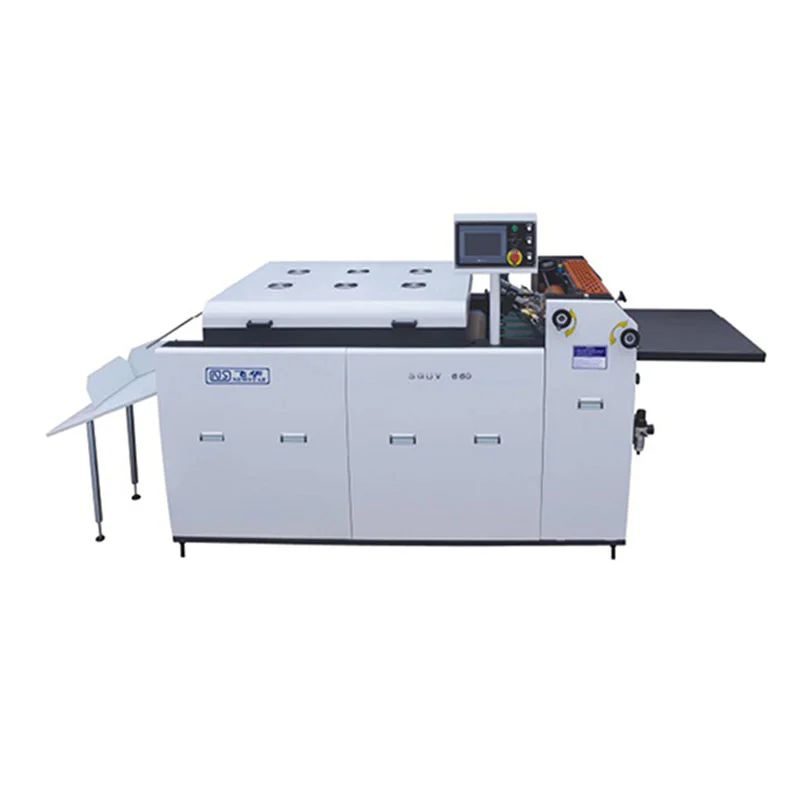
The Manual Coating Machine refers to a type of coating or spray apparatus operated directly by a technician (rather than fully automated) to apply coatings (liquid paint, powder, lacquer, etc.) onto substrates in small-batch, experimental, repair, or custom finishing settings. In many manufacturing, R&D, and repair shops, a manual coating machine provides flexibility and control where full automation is impractical or too costly.
In the following sections, readers will learn:
The functional definition and key technical parameters of manual coating machines
The advantages and limitations relative to automated systems
Best practices for operating, optimizing, and maintaining them
Emerging trends and strategies for future adoption
A manual coating machine is equipment that enables a user to manually control the deposition of a coating (e.g. paint, powder, lacquer) onto a workpiece via a handheld or semi-handheld gun or nozzle, with control over flow rate, spray pattern, distance, and sometimes electrostatic charge. Unlike fully robotic or conveyor-driven systems, manual machines are typically used in smaller scale, custom, R&D, or finishing tasks.
Manual spray gun with fluid feed: Operator controls pressurized fluid (liquid paint) through the gun.
Manual electrostatic powder spray gun: Operator holds a powder spray gun, applying charged powder to a substrate (common in powder coating).
Hybrid manual / semi-automatic units: Manual gun with controlled powder feed, meters, or limited programmable control.
Below is a representative table of key technical parameters engineers use when specifying a manual coating machine:
| Parameter | Typical Range / Value | Importance & Notes |
|---|---|---|
| Spray pressure / voltage | 20–100 psi (liquid); 40–100 kV (electrostatic powder) | Determines atomization quality or electrostatic attraction |
| Powder flow / throughput | 100–600 g/min (for powder systems) | For powder systems, consistency and flow stability matter |
| Spray gun type & nozzle orifice | 1.0–2.5 mm (liquid), various powder nozzles | Nozzle size affects fan shape, coverage, and control |
| Working distance | 100–300 mm (typical) | Distance from gun to workpiece affects uniformity and overspray |
| Power / voltage | 220–480 VAC (for auxiliary systems), HV power supply for powder | Must support the energization circuits |
| Repeatability & adjustability | Fine flow, fan, and pattern control | Essential for consistent coating outputs |
| Material compatibility | Solvent-based paints, waterborne, powder coatings | The machine must be chemically compatible |
| Weight & ergonomics | 0.5–1.5 kg for handheld units | Operator fatigue matters in manual usage |
These parameters may vary depending on the coating medium (liquid vs. powder) and the specific application (industrial parts, prototypes, repair, etc.).
Flexibility & adaptability
Manual operation allows adjusting spray paths, angles, and defects in real time—especially useful for custom parts, repairs, prototypes, and on-site finishing.
Lower capital investment
Compared to full robotic lines or conveyor systems, manual machines require less upfront cost and complexity, making them accessible to smaller firms or for pilot runs.
Ease of maintenance and troubleshooting
Because there are fewer moving parts, integration, or motion axes, diagnosing issues (blockages, spray inconsistency) is simpler.
Better small-batch economics
For low volumes, manual machines can be more cost-effective than automating, especially when coating changeovers are frequent.
Immediate control & human feedback
The operator can respond dynamically to spray patterns, substrate irregularities, and adjust on the fly.
Operator dependency and variation: Human skill differences can lead to inconsistent coating thickness or defects.
Lower throughput: Manual operation is slower than automated continuous systems.
Ergonomic fatigue: Prolonged use can cause operator strain.
Less data integration: Limited ability to collect process data, monitor performance or dynamically adapt to process variables (though that is changing).
Scalability constraints: Not suitable for very high volumes where consistency and speed demand automation.
Even in industries trending toward full automation, the manual coating segment remains important, particularly for prototyping, maintenance, repairs, and specialty finishing tasks.
As the overall coating machines market expands, manual systems still capture a niche share in customization and servicing roles.
Moreover, as smart manufacturing becomes more prevalent, manual systems are evolving with sensor integration, connectivity, or “assisted manual” features bridging the gap between manual and automated lines.
Define coating medium & compatibility
Confirm whether the system is for liquid paint, powder coating, or hybrid materials. Check chemical compatibility, viscosity, and solids content.
Match throughput to batch size
Choose a machine whose powder or liquid feed rate and gun capacity align with your anticipated job sizes.
Ergonomics & operator comfort
Weight, grip design, ease of movement, and usability controls are significant for long sessions.
Adjustability & control precision
Machines with fine-tunable spray parameters (fan width, flow, voltage) yield better outcomes and reduce waste.
Serviceability & parts availability
A model with modular or replaceable components is easier to maintain.
Optional integration of sensors or digital feedback
Some modern systems allow measurement of spray current, charge, or flow to assist consistency.
Pre-spray checks and calibration
Test spray pattern on a dummy surface, verify flow rate, adjust pressure, and check for clogging.
Maintain consistent gun-to-surface distance
Use jigs, spacers, or visual cues to keep the distance stable (e.g. ~200 mm for many applications).
Overlap passes
Use 30–50% overlap between spray passes to ensure uniform coverage without stripes.
Move at steady speed
Avoid stopping or accelerating abruptly to prevent buildup or thin zones.
Monitor environmental conditions
Temperature, humidity, and airflow affect drying, curing, and coating adhesion—especially for waterborne or powder coatings.
Clean frequently
During the run, intermittently purge or blow out the nozzle (especially in powder systems) to prevent blockages.
Recycle and reclaim overspray (for powder systems)
Use cyclone or dust collection systems to reuse un-deposited powder.
Track process parameters
Even if manual, record pressure, flow, ambient conditions, and any adjustments made for consistency over batches.
Daily & shift-level maintenance
Clean nozzles, inspect seals, check hoses, ensure electrical connections are intact.
Prevent buildup & contamination
Use filters, strainers, and regularly cleaning to avoid cross-contamination between colors or chemicals.
Replace wear parts proactively
Guns, tips, needles, or insulator parts degrade over time—keep spares and monitor performance drift.
Calibration & verification
Periodically test thickness uniformity (e.g. using micrometers or coating thickness gauges) and adjust settings.
Electrical safety & grounding
Especially in electrostatic powder systems, ensure proper grounding and HV insulation.
Troubleshooting common defects
Uneven thickness or stripes: Check gun stability, movement speed, or overlap
Overspray or low transfer efficiency (in powder systems): Re-adjust voltage, spray distance, powder flow
Blockages / erratic spray: Clean or replace nozzle, check powder feed consistency
Poor adhesion or cracking: Reevaluate substrate preparation, curing schedule, or coating compatibility
By following disciplined operating and maintenance practices, a manual coating machine can deliver high-quality finishes reliably and affordably in the realm where full automation is not optimal.
Even though automation, robotics, and “smart factory” concepts dominate headlines, manual coating machines are evolving in parallel to remain relevant. Key trends include:
Sensor-assisted or “intelligent manual” systems
Integration of sensors (spray current, powder charge, flow sensors) gives feedback to operators in real time, helping reduce variation and improve consistency.
Connectivity & data logging
Even handheld systems may include IoT modules to record process data (spray settings, environmental conditions) for traceability and continuous improvement.
Augmented reality (AR) assistance
Future systems may overlay spray guidance or feedback to operators via AR goggles or screens to standardize movements, distances, and coverage.
Modular & quick-change nozzles / heads
The latest spray gun units emphasize modular design, enabling fast change of nozzles, maintenance, or adaptation to different coating media.
Hybrid automation collaboration
Some production lines may adopt a mixed approach: robots handle bulk movement, while human controllers operate a manual gun for final touches, repairs, or trimming.
Sustainability & eco-friendly coatings
Regulations and market demands push toward low-VOC, waterborne, and powder coatings. Manual systems must adapt to ensure compatibility, faster curing, and better material efficiency.
AI-driven parameter recommendations
Even for manual systems, AI could analyze past batches and suggest optimal flow, voltage, or spray patterns for a new job—reducing setup time and trial runs.
As these trends mature, manual coating machines will increasingly incorporate “assisted intelligence,” allowing human operators to work more precisely, consistently, and with data support.
Q: How can consistency be maintained across different operators using a manual coating machine?
A: Standardizing gun-to-surface distance, movement speed, overlap, and spray parameters helps. Using guide jigs or rails, recording parameter logs, sensor feedback, and training reduce variation.
Q: Can a manual coating machine achieve the same finish quality as automated systems?
A: In many small-batch or repair scenarios, yes—provided the operator is skilled and the machine is well-calibrated. While throughput and absolute repeatability favor automation, manual systems excel in flexibility and adaptability.
Q: What types of coatings are suitable for manual machines?
A: Liquid paints (solvent or waterborne), lacquers, powders (if using electrostatic powder guns), and hybrid formulations—so long as the viscosity, particle size, and feed compatibility are matched.
Q: When might a manual machine no longer be appropriate?
A: For very high-volume production where speed, consistency, or throughput demands exceed what manual operation can deliver; or when a fully automated line yields lower per-unit cost despite capital investment.
“Can a Manual Coating Machine Survive in the Age of Smart Automation?”
This concise, question-style headline taps into common industry concerns and aligns with search patterns such as “manual coating machine trends”, “manual vs automated spray”, and “future of coating machines.”
As surface finishing demands diversify, manual coating machines continue to hold strategic value—offering flexibility, affordability, and hands-on control in contexts where full automation is unnecessary or impractical. With the advent of sensor assistance, connectivity, and algorithmic support, the gap between manual and automated systems is narrowing. For those seeking high-performance manual coating equipment, NEW STAR offers a robust line of manual spray and powder coating machines engineered for precision, durability, and future-proof adaptability.
For inquiries about specifications, custom configurations, or trial arrangements, contact us to discuss your application requirements and receive professional support.